


Everything you need to know about OSHA construction signage — in plain English, without the legalese.
Let’s be honest: nobody reads OSHA regulations for fun. The language is dense, the cross-references are maddening, and the formatting hasn’t changed since the 1970s.
But if you run a construction site, you need to know this stuff — because OSHA inspectors do, and they will check.
The Core Rule: 29 CFR 1926.200
That’s it. The rest of the regulation tells you exactly what that means in practice.
The Three Sign Types (And When to Use Each)
Danger Signs — When Someone Could Die
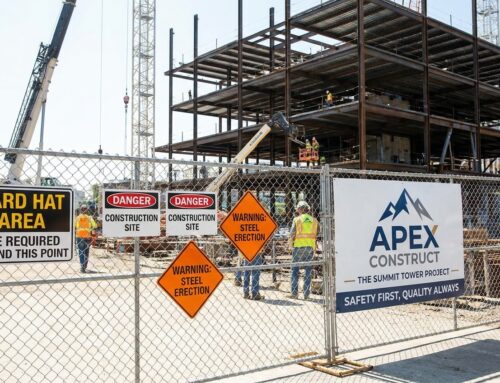
Red, white, and black. Signal word: DANGER. Use for imminent hazards that WILL cause death or serious injury if not avoided — high voltage areas, permit-required confined spaces, excavation zones deeper than 5 feet, crane operation zones, demolition areas.
Danger signs are only for life-threatening situations. Using them for minor hazards dilutes their meaning — and can actually be cited as improper signage.
Warning Signs — When Someone Could Get Seriously Hurt
Orange background, black text. Signal word: WARNING. Use for hazards that COULD cause death or serious injury — falling object zones, heavy equipment operation areas, chemical storage, welding operations, scaffolding work zones.
Caution Signs — When Someone Could Get Minor Injuries
Yellow background, black text. Signal word: CAUTION. Use for situations that could cause minor or moderate injury — wet surfaces, uneven ground, overhead work, low clearance areas, material storage zones.
The Sign Specs You Can’t Ignore
Letter Heights by Viewing Distance
| Viewing Distance | Minimum Letter Height |
|---|---|
| Up to 4 feet | 0.25 inches |
| 4-8 feet | 0.5 inches |
| 8-15 feet | 1 inch |
| 15-30 feet | 2 inches |
| 30-50 feet | 3 inches |
| 50-100 feet | 5 inches |
| Over 100 feet | 6+ inches |
Common mistake: contractors use signs with letter heights designed for office viewing distances on a construction site where workers are 50+ feet away. If the worker can’t read it, it doesn’t count as compliant.
The Fines (2026 Numbers)
| Violation Type | Minimum Fine | Maximum Fine |
|---|---|---|
| Serious | $1,116 | $15,625 |
| Other-than-Serious | $0 | $15,625 |
| Willful | $11,162 | $156,259 |
| Repeated | $11,162 | $156,259 |
| Failure to Abate | — | $15,625/day |
The Signs Contractors Always Forget
- Emergency information signs — Site address for 911, nearest hospital, site safety contact. Should be at every entry point.
- Multilingual safety signs — If your workforce speaks Spanish, your signs need to communicate to them. Courts have ruled that English-only signs may not meet the employee understanding standard.
- Hazardous material signs — If you have ANY chemicals on site, GHS-compliant labeling is required.
- Excavation-specific signs — Soil type, protective system used, competent person contact. Required for any trench deeper than 5 feet.
- Traffic control signs — If vehicles or equipment interact with public traffic, MUTCD-compliant traffic control is required.
Building Your Compliance Package
Every construction site needs: project identification and emergency information signs site-wide; danger, warning, caution, and PPE-required signs for safety; entrance, exit, delivery, and parking signs for direction; and area-specific signs for excavations, crane zones, welding, scaffolding, and lockout/tagout.
The G22 Approach
At Graphics 22, we don’t just sell you signs. We build your entire compliance package — site assessment, jurisdiction review (federal, state, AND local), custom design branded to your company, manufacturing built for construction environments, package delivery organized by area, and ongoing support as regulations change.
We’ve built compliance packages for over 500 construction projects across Pennsylvania, Ohio, West Virginia, Maryland, New York, and DC. We know what inspectors look for because we talk to them. We know what gets cited because we’ve seen the citations.
Ready to Get Started?
Graphics 22 Signs has been manufacturing OSHA-compliant construction signage for over 50 years. We know the regulations because we’ve lived them.







Leave A Comment